
When it comes to apparel production, the choice between CMT (Cut, Make, Trim) and FPP (Full Package Production) can significantly impact the efficiency, quality, and cost of your manufacturing process. In this article, we’ll dive deep into the differences to help you determine which method is best suited for your brand.
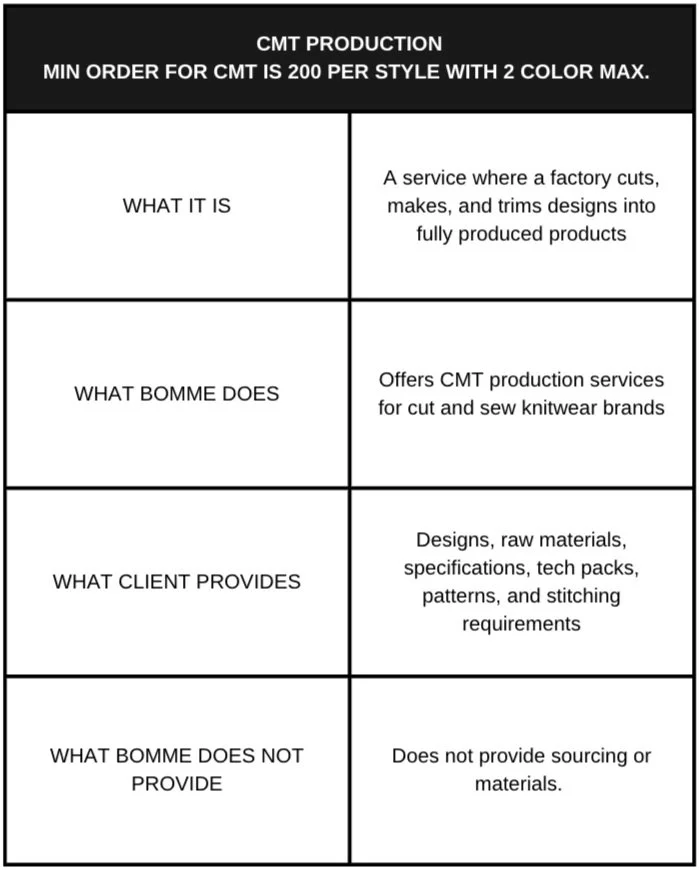
CMT (Cut, Make, Trim) Overview
What iS CMT?
CMT is a manufacturing process where the brand supplies essential materials—such as fabrics, patterns, and trims—while the manufacturer assembles the garments. The brand retains control over sourcing, quality, and materials, but also takes on more responsibility in managing production logistics. Here’s a simplified breakdown of the CMT process:
Cut: The fabric is cut based on the brand's provided patterns.
Make: The cut pieces are sewn together to create the garment.
Trim: Final touches like adding trims and finishes are completed.
Why Brands Choose CMT:
Flexibility in Sourcing: Brands have the freedom to source their own fabrics and trims, offering more control over material selection.
Control Over Production: With CMT, brands manage each stage of production, making it ideal for those who want to oversee every detail.
Lower MOQ Requirements: CMT tends to work well for brands with smaller production runs, as manufacturers can accommodate lower minimum order quantities (MOQs).
The Hidden Drawbacks of CMT: While CMT offers flexibility, it also places a significant burden on the brand, especially smaller operations. Managing fabric sourcing, production logistics, and quality control often requires more hands-on work, which can strain a brand’s resources. CMT is generally not a cost-saving solution when you factor in the additional labor required to manage multiple suppliers and processes. Moreover, manufacturers specializing in CMT tend to be smaller operations, which means they handle a wide range of garment types—often without excelling in any particular category. This can compromise the final product's quality, especially when compared to the specialized expertise of larger FPP operations.
FPP (Full Package Production) Overview
What is FPP?
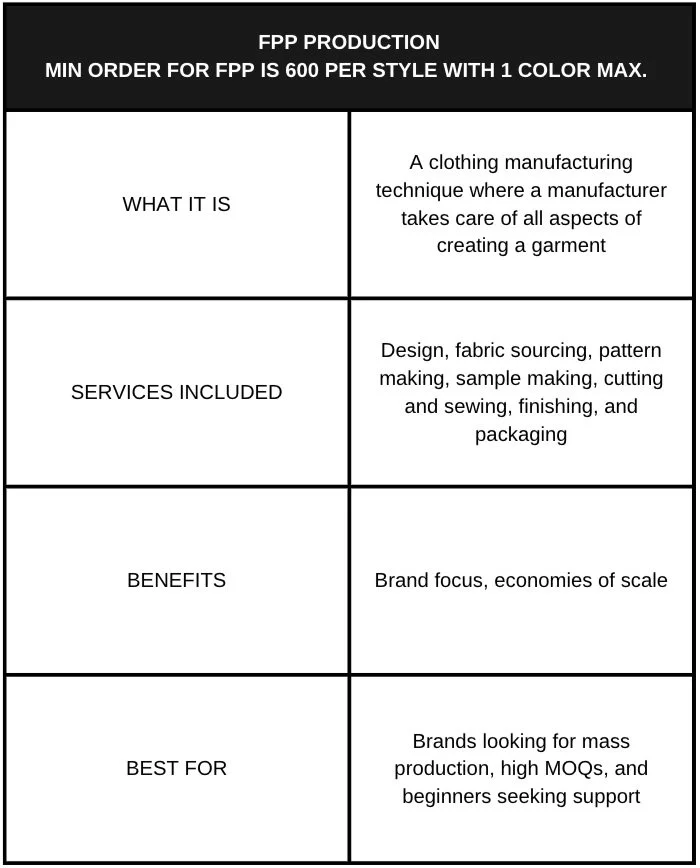
FPP is a comprehensive, all-in-one production solution. With FPP, the manufacturer handles every aspect of production, from material sourcing to the final delivery of finished garments. This allows the brand to focus on design, marketing, and scaling their business while the manufacturer manages the complexities of production.
The FPP Process:
Design Submission: The brand provides design specifications, including tech packs.
Material Sourcing: The manufacturer sources fabrics, trims, and accessories, often leveraging industry relationships for quality materials at competitive prices.
Production: Garments are cut, sewn, and assembled by specialized teams with expertise in specific categories.
Quality Assurance: The manufacturer performs strict quality checks to ensure consistency across production batches.
Logistics: The finished products are packaged and shipped directly to the brand or its retail partners.
The Key Benefits of FPP
1. Ideal for Brands with Professional Tech Packs and Higher MOQs
FPP is a great fit for brands that are ready to scale and can provide detailed tech packs. These brands benefit from the streamlined process FPP offers, allowing them to focus on growing their business through sales and marketing. Manufacturers who provide full package services often require higher MOQs, which suits brands aiming for larger production runs and high growth potential.
2. Time and Resource Efficiency
With FPP, you don’t have to worry about sourcing materials, managing multiple suppliers, or dealing with production details. The manufacturer handles all of this, freeing up your time and resources to focus on core business activities. This time-saving aspect is especially crucial for brands operating in fast-paced fashion cycles.
3. Higher Quality Production
One of the most significant advantages of FPP is its specialization. Unlike CMT operations that handle various categories with limited expertise, FPP manufacturers tend to have specialized teams for specific types of garments. This leads to higher-quality products, as each production phase is handled by experts. Whether it’s sportswear, high-fashion pieces, or casual wear, FPP providers ensure superior craftsmanship due to their focused expertise in each category.
4. Simplified Communication
Instead of juggling multiple vendors for fabrics, trims, and production, brands using FPP have a single point of contact for the entire process. This reduces miscommunication and makes the production process much smoother, which is essential for maintaining quality and meeting deadlines.
5. Access to Innovation and Industry Trends
FPP manufacturers often stay updated with the latest technologies and industry trends. This can provide your brand with access to cutting-edge production techniques and materials, giving you a competitive edge in the market.
CMT vs FPP: A Comparison
When it comes to apparel production, businesses often deliberate between CMT (Cut, Make, Trim) and FPP (Full Package Production). Each approach has its own advantages and can greatly impact the cost, control, and efficiency of production.

1. Cost and Quality
While CMT is sometimes thought of as a more affordable option, this is misleading. The costs of sourcing your own materials, managing multiple suppliers, and overseeing production add up quickly. In contrast, FPP may have higher upfront costs, but it saves time, reduces complexity, and often results in better-quality garments due to the manufacturer’s specialization and scale.
2. Production Scale
CMT is better suited for brands that cannot meet the higher MOQs required by FPP manufacturers. However, the trade-off is that smaller CMT operations often lack the capacity for large-scale production or specialized expertise, which can result in inconsistent quality.
FPP, on the other hand, is ideal for brands looking to scale. The larger operations can handle high-volume orders efficiently while maintaining consistent quality, making it a better option for growth-focused brands.
3. Control vs. Simplification
With CMT, brands maintain control over every aspect of production, which can be an advantage for those that prioritize customization and hands-on involvement. However, this comes with increased responsibility and more potential for issues.
FPP simplifies the production process, allowing brands to outsource all responsibilities while ensuring quality through the manufacturer’s established processes. This streamlined approach is perfect for brands that want to focus on growth, design, and marketing without getting bogged down in production logistics.

Making the Right Choice for Your Brand
Choosing between CMT and FPP comes down to your brand’s specific needs. If your priority is maintaining strict control over every step of production and you have the resources to manage smaller MOQs, working with a CMT manufacturer might be a viable option. However, for most growing brands, Full Package Production offers unmatched scalability, higher quality due to specialization, and the ability to focus on design, marketing, and business development.
For those looking to streamline operations and maximize efficiency while producing high-quality garments, FPP is the superior choice.
