
Clothing Tech Pack Example (Real Garment Spec Breakdown)
When clothing manufacturers receive a new garment for development, the first document they review is the tech pack. A tech pack contains the technical specifications required to build a garment accurately during sampling and production. It acts as the production blueprint that communicates how a garment should be constructed, measured, labeled, and finished. Many fashion founders hear the term “tech pack,” but few have seen what a real one looks like or how factories actually use it. This guide walks through a real clothing tech pack structure, explaining the key sections manufacturers expect when reviewing a garment for development. If you're new to tech packs, start with our complete Clothing Tech Pack Guide which explains how manufacturers use these documents during garment development.
What a Real Clothing Tech Pack Looks Like
A production-ready tech pack is not a single page. It is a structured document made up of multiple technical pages, each serving a different role during development. Most apparel tech packs include:
garment overview page
technical flat sketches
bill of materials (BOM)
measurement specification sheet
construction notes
labeling instructions
packaging instructions
Each section gives factories a different layer of information needed to build the garment correctly. Below is a breakdown of how these sections typically appear in a real garment tech pack.
1. Garment Overview Page
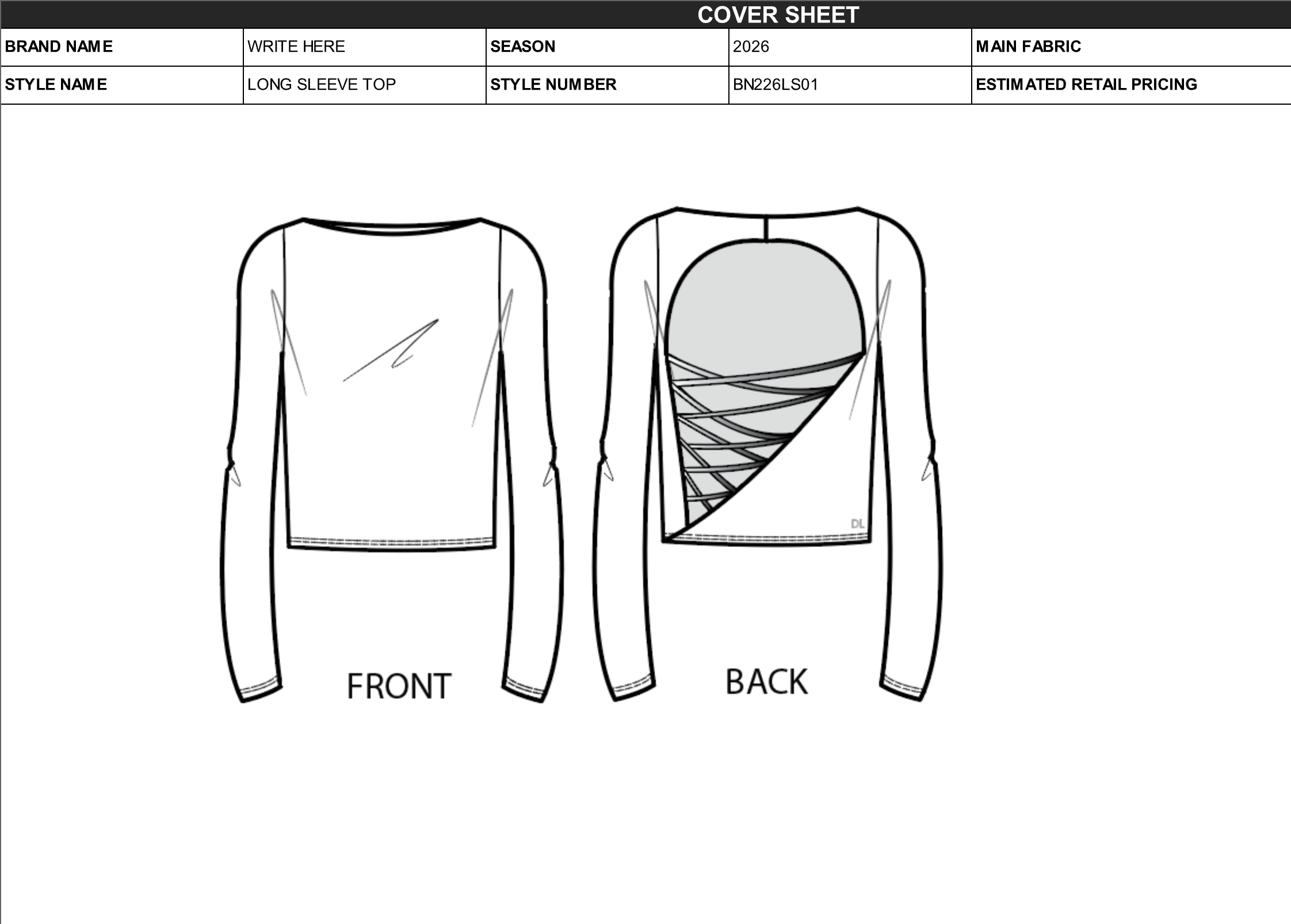
The first page of a tech pack usually provides a high-level overview of the style. This page helps factories quickly understand what they are reviewing before they examine the detailed technical sections. A typical overview page includes:
brand name
style name or style number
garment category
season or collection
base sample size
revision date
designer contact information
This page acts as the reference header for the entire document. When manufacturers work with dozens of styles at once, this page helps keep documentation organized.
2. Technical Flat Sketches
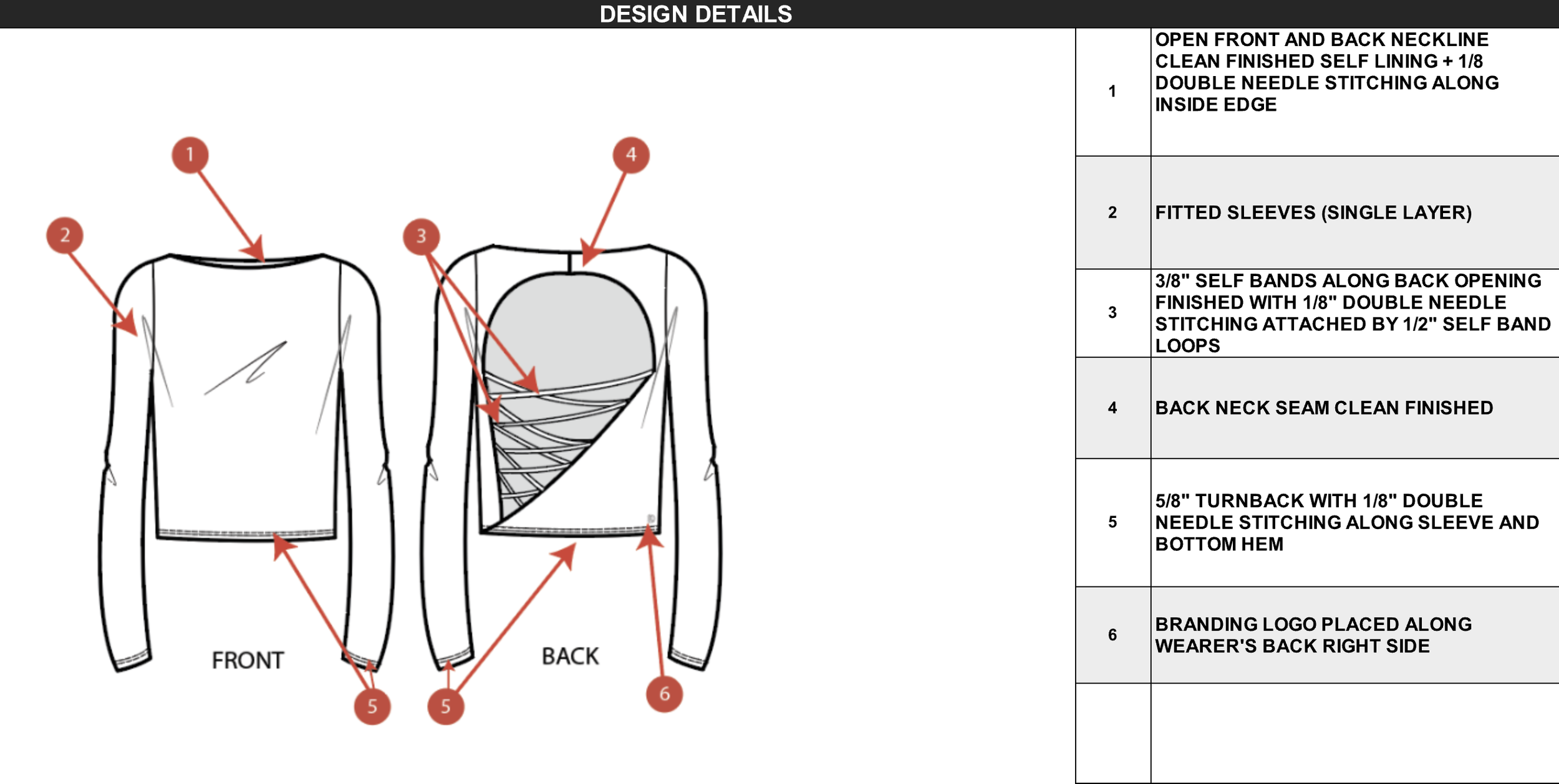
Technical flat sketches show the garment structure in a simplified, production-focused format.Unlike fashion illustrations, technical flats are drawn to communicate construction clarity rather than design styling. Most tech packs include:
front view flat sketch
back view flat sketch
close-up detail sketches when needed
These sketches identify key garment features such as:
panels and seams pockets and closures
ribbing or trims
stitching locations
Factories rely on these sketches to understand how the garment is assembled.
3. Bill of Materials (BOM)
The Bill of Materials (BOM) lists every component used to construct the garment. This section allows factories to understand what materials are required before sampling begins. A typical BOM includes:
main fabric
lining fabrics
ribbing or elastics
zippers and buttons
labels and tags
drawcords or hardware
Each component may also include:
fabric composition
fabric weight (GSM)
trim specifications
supplier reference if applicable
The BOM is one of the most important sections for costing. Factories use this information to estimate production pricing. If you're building your first tech pack from scratch, review our step-by-step guide on how to make a tech pack.
4. Measurement Specification Sheet (Spec Sheet) OR POM
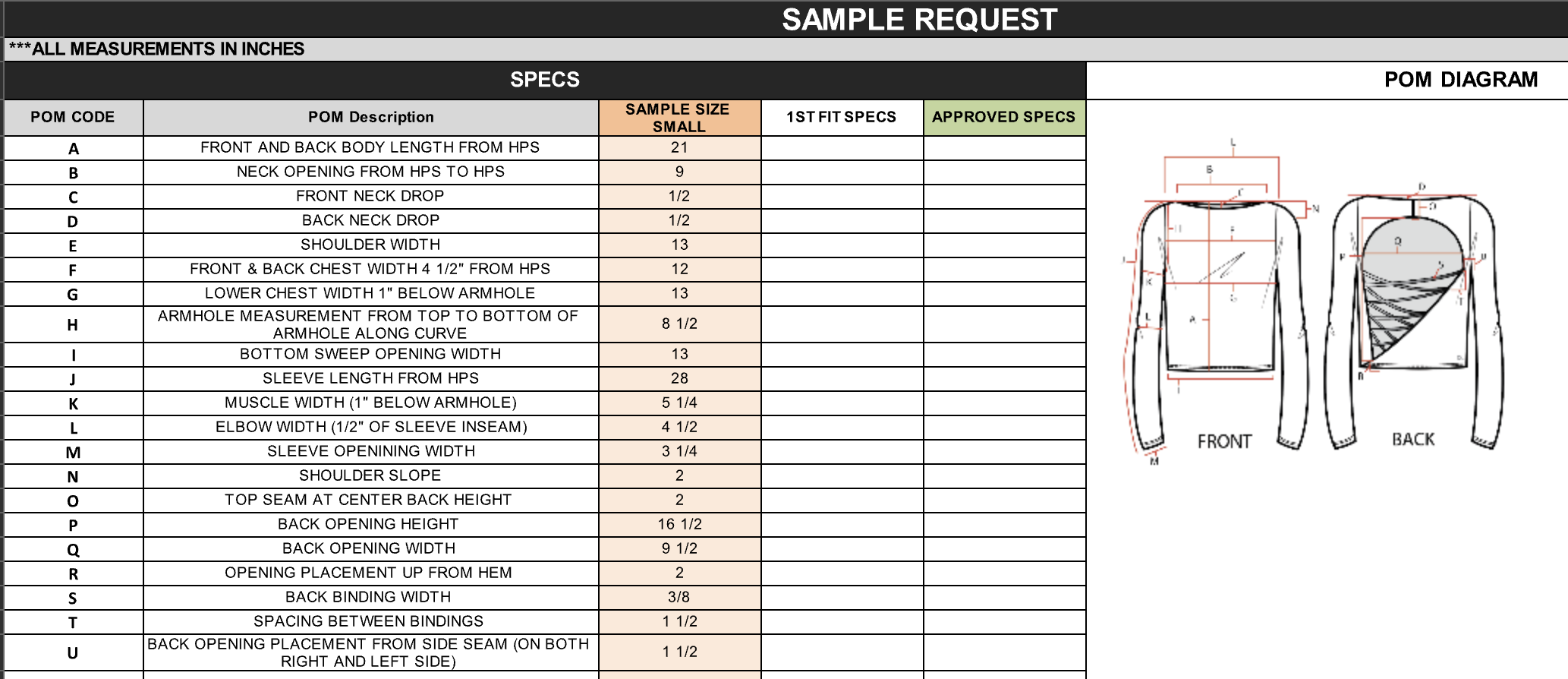
The measurement specification sheet defines the garment's dimensions using Points of Measure (POM). This page is what many people refer to as the spec sheet. A spec sheet includes:
base sample size
measurement points across the garment
measurement values
tolerance ranges
Common POM measurements include:
chest width
body length
sleeve length
shoulder width
hem width
Manufacturers use spec sheets to:
build patterns
evaluate sample fit
grade garments into multiple sizes
verify measurements during production
Many first-time tech packs fail because key measurement or construction details are missing and factories cannot evaluate garment fit. Avoid common documentation errors in our guide to tech pack mistakes.
5. Construction Notes
Construction notes describe how the garment should be assembled. These notes provide production instructions that clarify how materials and panels should be sewn together. Construction details may include:
seam types
stitch types
seam allowances
reinforcement areas
finishing methods
For example, a hoodie tech pack might specify:
double needle stitching on hems
coverstitch construction on shoulders
bartacks at pocket corners
These details help ensure production consistency.
6. Labeling and Branding Instructions
Tech packs also document how branding elements should be applied to the garment. This section usually includes:
woven label placement
printed label placement
care label instructions
size label location
Manufacturers use these instructions to ensure garments meet both branding and regulatory requirements.
7. Packaging Instructions
The final section of a tech pack typically outlines how garments should be packaged for shipment. Packaging instructions may include:
folding method
hang tags
poly bag requirements
barcode labels
carton packing instructions
While this section is often shorter, it helps ensure that finished garments are packaged consistently before shipping.
How Manufacturers Use Tech Packs During Development
Factories rely on tech packs throughout multiple stages of apparel development.
Product Review
Manufacturers first review the tech pack to determine whether the garment is ready for sampling and whether all required information is present.
Sample Development
Patternmakers and sample rooms use the technical sketches, BOM, and measurement specs to create the first prototype.
Fit Review
Once a sample is produced, the garment is measured against the spec sheet to confirm that it matches the documented specifications.
Costing
Factories review the BOM and construction details to estimate production costs.
Production
After the sample is approved, the tech pack becomes the reference document used during bulk manufacturing.
Why Most First-Time Tech Packs Fail
Many first-time brands underestimate how much detail factories require. Common issues include:
missing measurement specifications
incomplete material information
vague construction instructions
unclear labeling details
When documentation is incomplete, factories must request additional clarification before sampling can begin. That slows down development. A well-structured tech pack prevents these delays by organizing the information manufacturers need in one place. If you're preparing garments for development, starting with a structured template can make the process much easier. The BOMME tech pack template includes the same sections described in this article:
garment overview page
technical flat sketches
bill of materials
measurement specification sheet
construction notes
labeling instructions
You can download the template here: Free Clothing Tech Pack Template →
Final Thoughts
A clothing tech pack is not just a design document. It is the technical specification used by factories to build garments. By organizing garment details, measurements, materials, and construction instructions into one document, tech packs allow manufacturers to:
evaluate garments faster
produce accurate samples
maintain quality during production
For brands preparing to manufacture apparel, learning how to structure a tech pack is one of the most important steps in the development process.