Fashion has long been an industry built on exclusivity, but today’s landscape is challenging these notions.
Accessibility has become a major point of focus in the fashion world, especially as disability awareness has risen and more people with disabilities are advocating for themselves as consumers and as a part of the sector’s inner workings. Although there’s still much progress to be made in dismantling an inaccessible system, that hasn’t stopped brands from constantly innovating to create adaptive and inclusive clothing and accessories that can change the game for disabled communities.
Rather than making pieces that focus solely on comfort and functionality, making them as fashion-forward as any other garment allows more people to take part in developing their style. Here’s a look at some of the latest accessible clothing and accessories in development:
Adaptive apparel
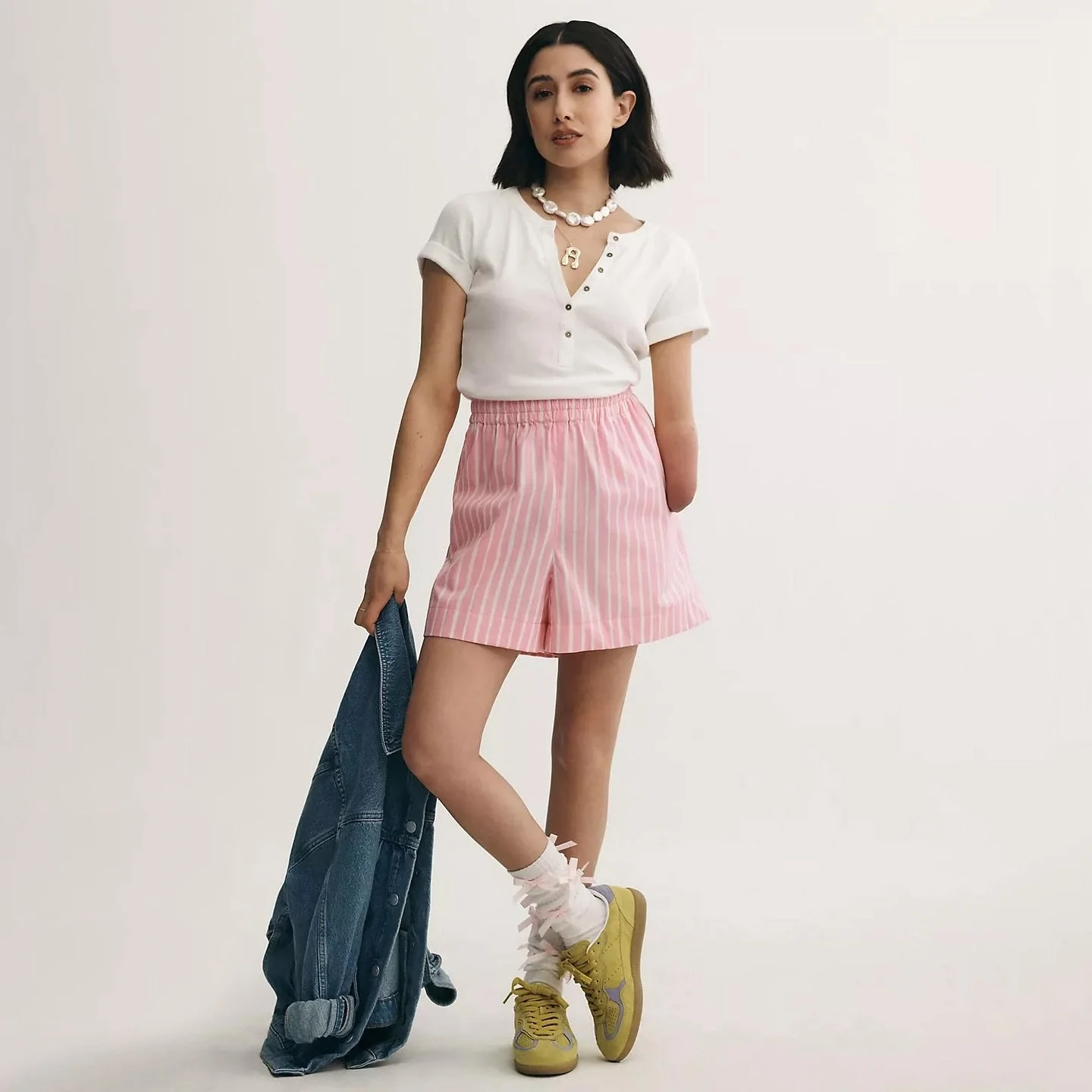
Credit: @urbncareers on Instagram
Comfortable and easy-to-wear clothing designed for disabled people often compromises style, but newer innovations in adaptive apparel ensure that all kinds of bodies can get fashionable pieces, regardless of their physical limitations. Fashion retailer Anthropologie released a line of adaptive-friendly clothing in 2024, working closely with leaders in the space and disabled influencers to develop the collection. The garments have accessible features like magnetic or snap closures to make them easy to wear.
It also includes adaptive versions of best-selling products, such as the Colette cropped wide-leg pants by Maeve. Two versions of the pants were released: one for standing and another for sitting to cater to the needs of wheelchair users. It also features The Somerset Mini Dress, another customer favorite. Other than making stylish clothes with adaptive features, making popular products more universal and accessible enables people with disabilities to enjoy what other consumers are wearing.
Hearing aid glasses
Assistive devices for deaf and hard-of-hearing (HoH) people, such as hearing aids and cochlear implants, have often focused on practicality over aesthetic appeal. Despite their benefits, some people with hearing loss prefer not to wear them. They may find them uncomfortable, don’t like the look, or feel self-conscious wearing them.
Nuance Audio aims to change the game for hearing devices by combining fashion and function, allowing HoH individuals to benefit from enhanced hearing without compromising style. The brand’s hearing glasses use beamforming technology to allow wearers to tune into the sounds in their direction and reduce background noise.
The high-quality tech blends seamlessly into the glasses frames to make them look indistinguishable from any other pair of specs. They also function as regular eyewear, correcting vision and protecting the eyes from UV rays. Individuals with mild to moderate hearing loss can feel more comfortable and confident while wearing these devices, connecting accessibility and style.
Quick-on shoes

Shoes are a regular part of everyday style, but they’re not as straightforward to wear for disabled people. Physical limitations and mobility challenges make putting them on much more complex and frustrating. Adaptive shoes make footwear more accessible and comfortable, giving people with disabilities independence and confidence when it comes to dressing themselves.
Decathlon has been developing an innovative quick-on shoe that easily slips on the foot. The shoe is designed in a way that allows people to put it on with a single hand in just five seconds. It eliminates the struggle with laces and straps many people with disabilities face. A year-long study involving scanning over 250 feet of wheelchair users was conducted to help develop them, ensuring it meets consumer needs. The shoes can make breakthroughs in the inclusion of disabled people in sports while also leveraging a versatile sporty design that’s seen in popular styles like streetwear.